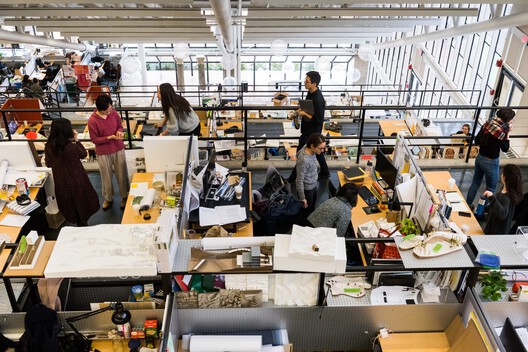
By the mid-nineteenth century, American universities began to distinguish architecture from civil engineering and the applied sciences formally. Architecture was emerging as a discipline defined by both technical competence and conceptual inquiry, spatial imagination, and cultural agency. As this disciplinary identity evolved in the postwar decades, its built expression coalesced into the emerging architectural language of Brutalism.

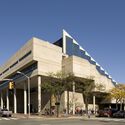

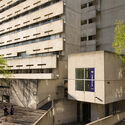

The post–World War II expansion of American higher education, driven by federal investment and social demand for mass access, created an urgent need for new academic facilities. Within this climate of institutional growth, architecture schools sought greater disciplinary visibility and presence. Brutalism, with its exposed concrete surfaces, unapologetic massing, and structural clarity, became the preferred medium through which architecture could assert its autonomy. Its material and formal choices offered a counterpoint to the instrumental aesthetics of engineering buildings, signaling a commitment to design as a mode of critical engagement.
Brutalist architecture schools did not conceal structure or minimize form. They made construction legible and space instructive. For students and faculty, these buildings were more than physical enclosures; they operated as pedagogical environments. Circulation, materiality, and daylight were not incidental but deliberate elements of design education. In turning their buildings into didactic instruments, architecture programs affirmed their disciplinary stakes through the very medium they taught.
Related Article
Spaces that Educate: The Role of Architectural Design on International Education DayThe Autonomous Building Typology
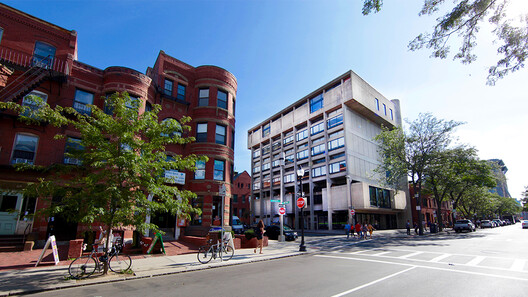
This typology frames the architecture school as a self-contained institution. These buildings consolidate all essential functions of architectural education, including studios, lecture halls, offices, libraries, fabrication labs, and review spaces, into a singular architectural volume. Often monumental in scale and spatially intricate, they promote total physical and intellectual immersion. In the postwar 20th century, this spatial autonomy paralleled a pedagogical shift toward architecture as a self-reflexive discipline, one that positioned design as a primary mode of inquiry.
By containing the full range of academic, creative, and technical activity within a single structure, these schools created an environment where architectural thinking could be continuously reinforced. The building itself became an active participant in education, serving as a demonstration of materials, systems, circulation, and spatial hierarchy. Students encountered architecture through the daily experience of navigating complex sectional arrangements, witnessing exposed structural logic, and inhabiting collective spaces of production and critique.
This immersive model supported a pedagogy rooted in intensity, collaboration, and spatial awareness. It fostered a sense of disciplinary identity that was distinct from adjacent fields such as engineering, art, or planning. The autonomous building was not simply a container for education. It was a constructed argument for architecture as a comprehensive and independent cultural practice.
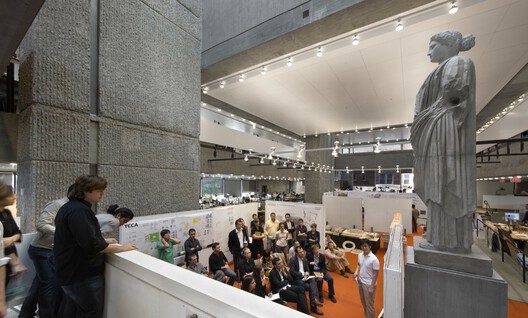
Yale Art + Architecture Building / Paul Rudolph
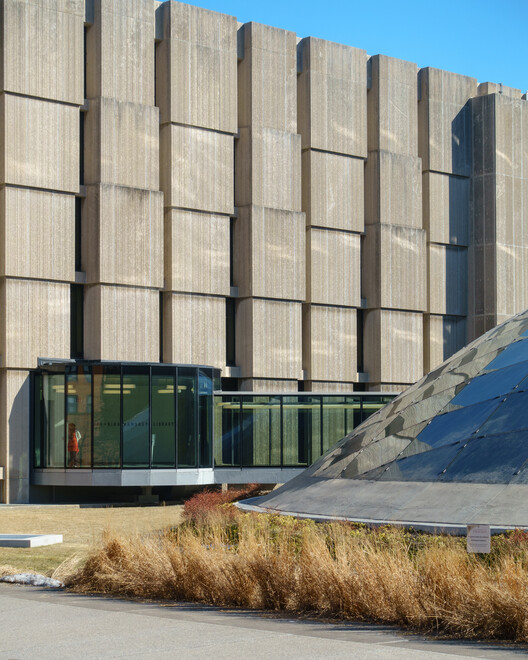
University of Illinois Chicago, College of Architecture, Design, and the Arts / Walter Netsch
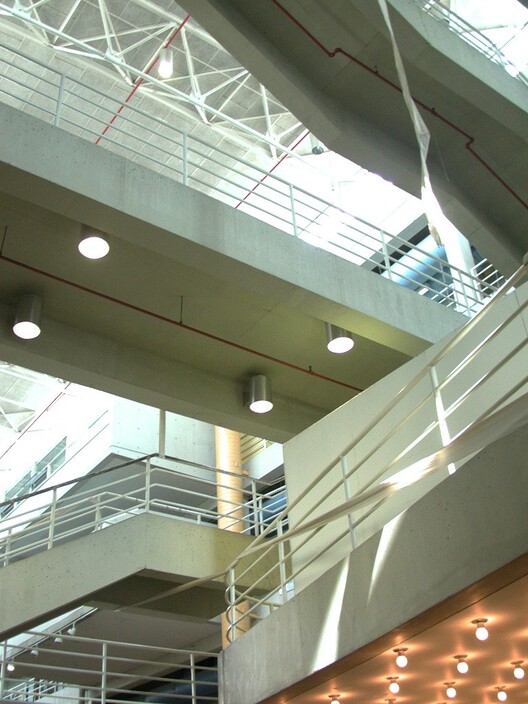
University of Tennessee, Art + Architecture Building / MHM Architects
The Functional Building Typology
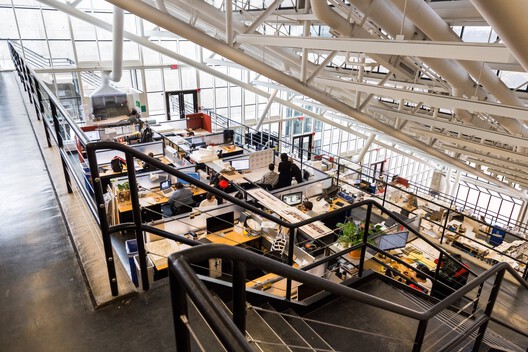
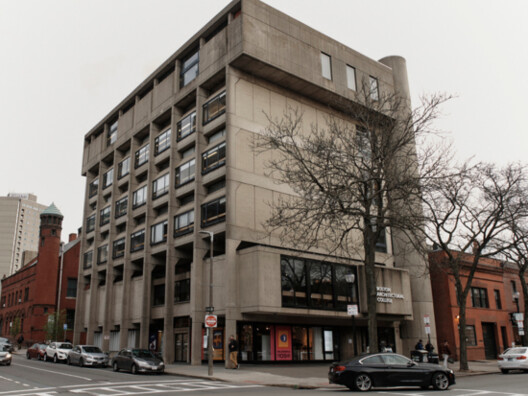
This typology reflects Brutalism's embrace of functionalism, prioritizing open plans, raw materials, and unadorned spaces that serve as neutral backgrounds for student activity. These buildings are designed as flexible, utilitarian environments that support the core activities of design education: making, testing, and learning. Here, Brutalism's focus on function and materiality takes precedence over aesthetic experimentation, transforming the architectural space into infrastructure rather than iconography.
In the postwar context, these Brutalist buildings provided architecture students with an ideal environment for hands-on design work. The open studio spaces, often stripped of extraneous decoration, were designed to facilitate the process of making and thinking. They were constructed to be adaptable, with flexible layouts that could evolve as needs changed. These spaces reinforced the belief that architecture education was as much about physical production and material experimentation as it was about conceptual design. By emphasizing practicality over ornamentation, these buildings reflected an educational philosophy that aimed to eliminate distractions and focus attention on the design process itself.
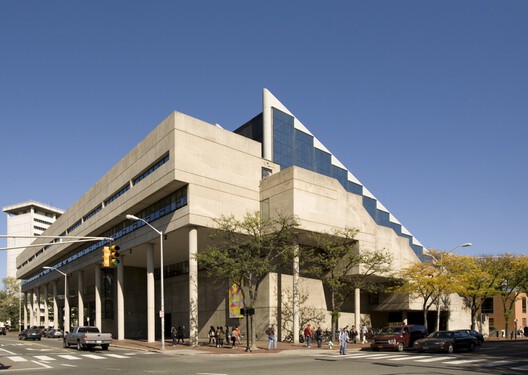
Harvard GSD, Gund Hall / John Andrews
Boston Architectural College, 320 Newbury Street / Ashley, Myer & Associates
The Civic Engagement Typology
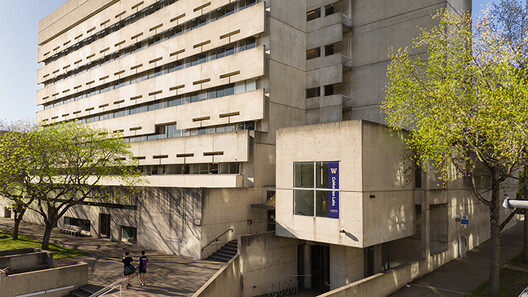
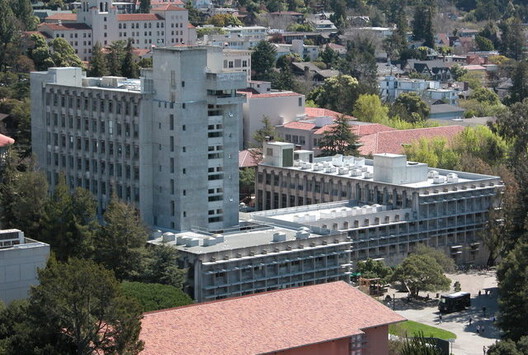
This typology represents architecture schools that assert a visible and participatory presence within their broader urban or campus context. Rather than withdrawing into autonomous complexes, these buildings engage their surroundings through plazas, grand staircases, public thresholds, and expressive, engaging façades.
In the postwar decades, this model aligned with a growing belief that architecture should be socially responsive and publicly legible. Pedagogically, this spatial orientation fostered a more outward-facing design culture. Students learned within buildings that were intentionally designed to be porous, positioned along major circulation routes, or strategically located in central areas. Studios and review spaces were often adjacent to public spaces, signaling that the act of design was not private or exclusive, but part of a broader social discourse. This typology invited engagement not only with architectural form, but with architecture's role in society.
University of California, Berkeley, Wurster Hall / Vernon DeMars, Donald Olsen, and Joseph Esherick
University of Washington, Condon Hall / Mitchell/Giurgola
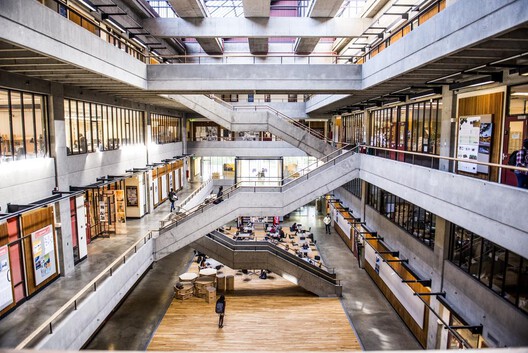
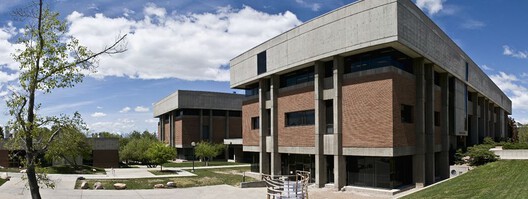
University of Utah, Architecture Building / Edwards & Daniels Architects
How Brutalism Shapes Architectural Pedagogy
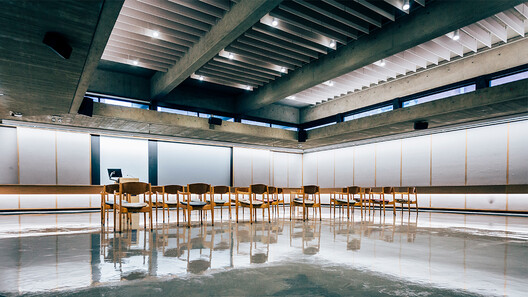
For architecture schools across the United States, Brutalism became a language of legitimacy and identity. These buildings expressed seriousness, clarity, and a rejection of ornament, embodying architecture's split from engineering in curriculum and space. By exposing their materials, structures, and functions, Brutalist architecture schools invited students to think critically about what buildings are and how they work. Circulation paths became lessons in spatial sequence, while concrete beams revealed the logic of load and span; spanning walls became surfaces for pin-ups and arguments. The buildings would be an integral part of the educational process.
As architecture education continues to evolve with digital tools, new pedagogies, and interdisciplinary models, many of these buildings remain in active use. Despite maintenance challenges or aesthetic controversy, they stand as physical evidence of a moment when architecture claimed its ground. Brutalism gave that claim form, weight, and permanence.